Posted By Paul
So just when you thought medical insurance couldn't get more confusing they added even more types of health related accounts for you to puzzle out. I've been trying to figure out what they all are so I thought I would share what I found.
Let's start with the FSA. For that I'm going to refer people to an earlier post which describes them in detail:
Are FSA's worth doing?
So then what is a Health Reimbursement Account (HRA)?
An HRA is an account setup by your employer that you can use for medical expense reimbursement. It's essentially your company telling you: "We're going to give you X dollars to help you pay for your health care costs this year."
Generally you have to submit proof of medical expenses to your company for reimbursement.
So what's the downside? As near as I can tell there really isn't one. However, the HRA might not be for everyone. For example, one thing I've seen are things where a company has two plans that you can choose from:
Plan A: Costs you $1000 a year and you don't get an HRA.
Plan B: Costs you $2000 a year and you get an HRA of $1500.
If you assume Plan A and Plan B have the same coverage, which one should you choose?
Well, if you are healthy Plan A might be better since you might have health care expenses that are so low that you might never even USE your HRA. However if you have some known health issues that makes you certain that you'll end up using that $1500, then Plan B becomes the better option.
Okay, so then the final account to cover is the Health Savings Account (HSA)
The first thing to know is that not everyone is ALLOWED to get an HSA. You only qualify for an HSA if you are in what is considered to be a High Deductible Health Plan (or HDHP...sigh all these abbreviations). If you are enrolled in an HDHP (your employer should let you know) then you are allowed to open an HSA.
So what does an HSA do? Well first lets cover how money goes INTO the HSA. Contributions come from YOU (not your employer like in the HRA), and contributions go in pre-tax (which is cool).
While in your account your money can be invested (the investment vehicles depend on the financial institution that holds your account usually a typical set of funds and a money market).
So how does money come out? You use it for reimbursement of medical expenses (by submitting paperwork to whoever is administering your HSA).
Now one cool thing about the HSA is that the money doesn't "expire" at the end of the year like it does with an FSA, it remains yours so if you have a lucky year you have that money saved up for the following year.
If you withdraw money from your HSA that isn't for a medical expense then you take a penalty, but from what I've read, this penalty disappears when you turn 65, so if you whatever money you don't use become yours without penalty when you turn 65, so in a way you can consider it part of your retirement funds.
Also, if you leave your job or change health plans such that you are no longer in a HDHP then your money doesn't disappear. If you leave your job your account remains yours. If you end up switching to a health plan later that ISN'T an HDHP then you're not allowed to contribute to your HSA any more, but you can still withdraw money for qualified expenses.
It seems to me that an HSA can be a good choice for people who are in a situation where they don't have many health expenses currently, but expect to in the future. They can put money in their HSA and if they are lucky enough to have a year without any significant medical costs then they have those contributions saved in case it happens the following year. If you manage to go several years without any significant medical costs then you could build up a pretty nice little rainy day fund for when something does happen.
I found a link to a pdf that did a nice comparison between the three accounts:
HRSFSAHSA.pdf
I also recommend the wikipedia entries as they all do a good job of explaining the accounts in further detail:
Wikipedia Entry - FSA
Wikipedia Entry - HRA
Wikipedia Entry - HSA
Showing posts with label taxes. Show all posts
Showing posts with label taxes. Show all posts
Wednesday, December 2, 2009

Thursday, August 20, 2009
Cool Info About the Roth
Posted By Paul
I read an article that made a point about the Roth that I thought was interesting.
For those of you not familiar with the Roth IRA you can read up on some earlier posts on this topic:
Roth IRA: A tax shelter for your golden years
-and-
The Roth as a College Savings Vehicle
I put money in a Roth with the basic idea that the more money I can save towards retirement the better. The article made the additional point that any money you put into a tax-deferred retirement account (like a 401k or IRA where you pay taxes when you take it out, presumably during retirement) has the added wrinkle that you really have no idea what the tax laws will be like when you retire.
The changes in the tax rates for a particular income bracket can have a dramatic effect on your retirement situation. Let's say theoretically that when you retire the tax rates are much lower...well then your retirement money will go that much farther and the opposite situation if tax rates end up being much higher.
When talking about a retirement that is probably decades away, it's VERY hard (perhaps impossible) to predict and plan for this.
However, the Roth sidesteps all this. You pay the taxes now so you don't have to worry about what the tax laws will be in the future.
Not to say you should dump your IRA or 401k, but I thought it was a cool little point about the Roth that hadn't occurred to me.
Here is the full article:
New Ways to shelter your retirement
I read an article that made a point about the Roth that I thought was interesting.
For those of you not familiar with the Roth IRA you can read up on some earlier posts on this topic:
Roth IRA: A tax shelter for your golden years
-and-
The Roth as a College Savings Vehicle
I put money in a Roth with the basic idea that the more money I can save towards retirement the better. The article made the additional point that any money you put into a tax-deferred retirement account (like a 401k or IRA where you pay taxes when you take it out, presumably during retirement) has the added wrinkle that you really have no idea what the tax laws will be like when you retire.
The changes in the tax rates for a particular income bracket can have a dramatic effect on your retirement situation. Let's say theoretically that when you retire the tax rates are much lower...well then your retirement money will go that much farther and the opposite situation if tax rates end up being much higher.
When talking about a retirement that is probably decades away, it's VERY hard (perhaps impossible) to predict and plan for this.
However, the Roth sidesteps all this. You pay the taxes now so you don't have to worry about what the tax laws will be in the future.
Not to say you should dump your IRA or 401k, but I thought it was a cool little point about the Roth that hadn't occurred to me.
Here is the full article:
New Ways to shelter your retirement
Saturday, May 23, 2009
Link: How to figure out the value of donations
Posted By Paul
I recently donated some old furniture and other items to a charity organization and I thought I would look into the possibility of taking a tax deduction on the donation.
I was immediately perplexed by what amount I should use for the various items. I vaguely remember what we paid for the items originally but I'm not sure what their fair price is now.
I did a little searching and found this great guide for the value of donated items. It's provided by the Salvation Army:
Salvation Army Donation Value Guide
I am going to try to keep track of all the various items we donate to charity and see how it affects my taxes this year.
I recently donated some old furniture and other items to a charity organization and I thought I would look into the possibility of taking a tax deduction on the donation.
I was immediately perplexed by what amount I should use for the various items. I vaguely remember what we paid for the items originally but I'm not sure what their fair price is now.
I did a little searching and found this great guide for the value of donated items. It's provided by the Salvation Army:
Salvation Army Donation Value Guide
I am going to try to keep track of all the various items we donate to charity and see how it affects my taxes this year.
Thursday, April 24, 2008
Article: Tax rebates start arriving Monday
Posted By Paul
I just read that tax rebates will start arriving on Monday.
Here is the article from CNN describing the distribution process.
Tax rebates to start arriving Monday
If you don't have any specific plans for your rebate, then you may want to read my previous post:
What to do with $500
I just read that tax rebates will start arriving on Monday.
Here is the article from CNN describing the distribution process.
Tax rebates to start arriving Monday
If you don't have any specific plans for your rebate, then you may want to read my previous post:
What to do with $500
Monday, March 31, 2008
Do You Need An Accountant?
 Posted By Paul
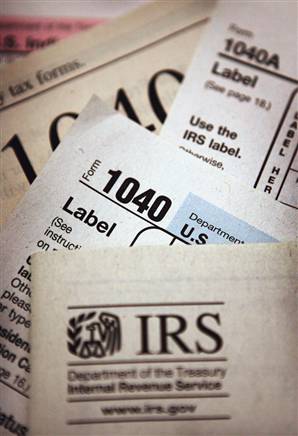
As the tax deadline approaches many people are faced with the question of whether or not they should do their own taxes or hire an accountant.
My view on the subject is that you should do your taxes for as long as you can possibly stand to.
Here is the basic progression I took with my taxes:
1) The EZ form. Ah those wonderful days of getting your taxes done in an hour. If you qualify for the EZ form, then by all means do your taxes yourself. I would say that ANYONE can do the EZ form by themselves or with a little help from a friend or relative.
2) Turbo Tax
 . When I no longer qualified to do the EZ form I moved to using Turbo Tax. I think Turbo Tax is a great product, it served me well for many years. For those of you who are unaware of this product, it's essentially a piece of software that asks you a bunch of questions and based on your answers it fills out your tax forms for you. If you no longer qualify for the EZ form but your taxes aren't THAT complicated then I would highly recommend this product.
3) The accountant. I remember very well what made me switch over from Turbo Tax to an accountant. It had been a year with a lot of crazy tax events (stock sales, buying my first house, etc.), and I had decided to try Turbo Tax once again. The first problem I ran into was I was unsure of what info Turbo Tax wanted. Turbo Tax would ask me for some value related to the closing costs for my home and I would look through my stack of home buying forms trying to figure out which value(s) it wanted. I made it through Turbo Tax with my best guess as to what it wanted and I ended up with a tax bill that was over $10000 (the biggest I'd ever had)! That was enough to get me to give the accountant a try. I got a recommendation for an accountant sent them my forms and had them do it (case in point, they came up with the exact same number that Turbo Tax did).
At that point I kept planning on going back to Turbo Tax as soon as I had a 'simple tax year', but that just never seemed to happen. Every year since had some significant tax event (house sale, marriage, starting a business, etc.) that made me willing to pay for an expert.
Now that my wife has her own business we pretty much involve the accountant every year. Our finances have evolved to the point where paying an expert is worth it to us.
One other point, is that this last year I switched accountants. Why? I was happy with the service that my accountant gave me, but they had sold their practice to a larger downtown firm and over the last few years their tax prep fees had gradually increased to the point where they were almost double what I had originally been paying. I started shopping around and quickly found an accountant that also gave good service (which for me means good communication via email and phone) and that was almost half the price.
How did I find an accountant? Well I just started asking around. I was lucky to have friends and coworkers that were all similar to me from a tax standpoint, and that were willing to tell me how much their tax preparation cost and how happy they were with their accountant.
So do your own taxes yourself for as long as you can do them with confidence and without driving yourself crazy. Once you decide to get an accountant, ask around to get an idea of price and recommendations, and don't hesitate to shop around if you ever feel like your accountant is getting overpriced.
Friday, December 14, 2007
Using our state tax rebate (kicker) constructively.
Posted by Matt
The kicker checks have arrived! In my original post about kicker checks, I indicated that I was planning to put my check into a Roth IRA. I then changed my mind about starting a Roth IRA at all, so what am I going to do with the money?
I wish it were up to me. Truth be told, the money was budgeted for spending before it ever got here, but I thought it would be worth listing what I think are some positive ways that we're using the money. As I mentioned previously, we've incurred some "extra" expenses associated with our new house.
- A few minor household fixes and additions.
- A new rug for the family room.
And we have more coming soon:
- Energy efficiency measures recommended during our energy audit. (Write-up coming soon!)
- A new drain to divert water from draining into our crawlspace (getting bids and considering a little more DIY).
- New furniture (looking for more home decor suggestions).
Obviously, the arrival of the check comes at an opportune time, and we'll be looking forward to our tax return, too!
Tuesday, December 11, 2007
Spending your kicker check the right way
Posted by Matt
If you haven't received your Oregon kicker check yet, think long and hard about whether the state was waiting for a check from you. If you owed payments on child support, student loans, income taxes or court fines, the state took the liberty of taking those payments right out of your kicker check.
I'd previously advocated for putting kicker money into a savings account, but the state is putting it to even better use by forcing people meet their financial responsibilities.
If you haven't received your Oregon kicker check yet, think long and hard about whether the state was waiting for a check from you. If you owed payments on child support, student loans, income taxes or court fines, the state took the liberty of taking those payments right out of your kicker check.
I'd previously advocated for putting kicker money into a savings account, but the state is putting it to even better use by forcing people meet their financial responsibilities.
Wednesday, November 7, 2007
Property tax discounts and refunds
Posted by Matt
I read an article in the Oregonian over the weekend suggesting that I take another look at my property tax statement(s). The author suggested that the county assessor's office does occasionally make a mistake, and it might be worth a little quick math. In our area, the assessed value of a home is not allowed to increase by more than 3% per year unless something has happened to obviously increase the value (like a remodel).

So, I hauled out the page full of numbers and got the calculator going. Here's how the numbers crunched:
Land value: +5%
Structure value: +29.7%
Total Real Market Value: 17.5%
Taxable Assessed Value: +9.2%
I almost let myself start getting excited about the possibility of an overpayment and refund, as was mentioned in the article. I called up the tax office for an explanation only to hear that the numbers were correct. The assessments actually take place in January, so our 2006 numbers were determined when our house was only 90% finished. (We moved in at the beginning of February.) Their other reminder was that property taxes increase for more than just assessed value (as was mentioned in the article). Most of the increase we saw this year came from extras like bond measures.
The article offered us one other bit of consolation:
I read an article in the Oregonian over the weekend suggesting that I take another look at my property tax statement(s). The author suggested that the county assessor's office does occasionally make a mistake, and it might be worth a little quick math. In our area, the assessed value of a home is not allowed to increase by more than 3% per year unless something has happened to obviously increase the value (like a remodel).

So, I hauled out the page full of numbers and got the calculator going. Here's how the numbers crunched:
Land value: +5%
Structure value: +29.7%
Total Real Market Value: 17.5%
Taxable Assessed Value: +9.2%
I almost let myself start getting excited about the possibility of an overpayment and refund, as was mentioned in the article. I called up the tax office for an explanation only to hear that the numbers were correct. The assessments actually take place in January, so our 2006 numbers were determined when our house was only 90% finished. (We moved in at the beginning of February.) Their other reminder was that property taxes increase for more than just assessed value (as was mentioned in the article). Most of the increase we saw this year came from extras like bond measures.
The article offered us one other bit of consolation:
The only sure-deal way to shave your property taxes is an easy one that's been around for years: Pay the whole bill by Nov. 15 and you'll get a 3 percent discount, guaranteed. If you pay in installments, you lose out.
Our property tax payment is made out of the escrow account for our mortgage, and the title company made the payment in plenty of time to save us the $132.22.
One other side note on property taxes: there are situations where it makes sense to pay your property taxes yourself instead of through escrow. If you hang onto the tax money until it becomes due and put it into a safe investment, you can earn a return on it all year long. However, most lenders require tax escrow until you reach a threshold level of equity or payment history. This is fine for most people anyway, as it helps to level out their budget and makes the tax payment (and discount) automatic.Wednesday, October 10, 2007
Are FSA's worth doing?
Posted By Paul
Now is the time of year where many companies have you decide if you want to sign up for an FSA account. Since I've been thinking about FSA's recently I thought I would do a quick posting on my experiences with them.
First a quick description of FSA's.
Note:
I'm going to focus on medical FSA's because that is what I know about. There are also FSA accounts used for dependent care, but I've never set up one of those because I don't have kids.
A Flexible Spending Account is an account that generally works like this:
1) You decide how much money you want to put into the account for the next year.
2) During that year money is taken out of your paycheck and deposited into your account. The money that goes into the FSA account is not taxed. (So if you decide to put $1200 into your account $100 comes out of your pay pre-tax each month)
3) You can use the money in the account for certain expenses. The set of allowed expenses is defined by the IRS but generally comes down to costs you have to pay for medical or dental care.
This includes stuff like:
*Doctor Co-Pays
*Fees that your insurance doesn't cover (like if you got a teeth cleaning and your insurance only pays for half of the costs, you can FSA the other half)
*Some medical or dental procedures that your insurance won't cover (like Lasik)
*Medicines (prescription or over the counter)
*Eye glasses (even prescription sunglasses)
So how do you get the money OUT of your account? The way it usually works is a system where you pay the costs yourself and then you submit the proof of payment documentation to the benefits company and they send you a check from your FSA account as reimbursement (once they have approved that the expense qualifies). Most companies that have FSA systems have web pages that makes it easy to submit claims and check your remaining balance.
So what's cool about this? It can be a huge savings since you're not paying taxes on the money used for your FSA account.
The tricky parts with FSA accounts are:
1. Generally any money you don't use up by the end of the year is lost (so you don't want to put $1000 into your FSA and then only use $100 over the year, because you'll lose the remaining $900).
2. The rules for what is allowed and what isn't can be complicated and sometimes odd. The general rule is that for the expense to be allowed it has to relate to treating a disease or injury. So bandages are allowed, but vitamins generally aren't. Tylenol is allowed, but aspirin isn't (because it can be used daily to prevent heart disease). Some expenses are allowed only if a Doctor prescribes them (like massage therapy).
3. It takes a little extra paperwork.
Now is the time of year where many companies have you decide if you want to sign up for an FSA account. Since I've been thinking about FSA's recently I thought I would do a quick posting on my experiences with them.
First a quick description of FSA's.
Note:
I'm going to focus on medical FSA's because that is what I know about. There are also FSA accounts used for dependent care, but I've never set up one of those because I don't have kids.
A Flexible Spending Account is an account that generally works like this:
1) You decide how much money you want to put into the account for the next year.
2) During that year money is taken out of your paycheck and deposited into your account. The money that goes into the FSA account is not taxed. (So if you decide to put $1200 into your account $100 comes out of your pay pre-tax each month)
3) You can use the money in the account for certain expenses. The set of allowed expenses is defined by the IRS but generally comes down to costs you have to pay for medical or dental care.
This includes stuff like:
*Doctor Co-Pays
*Fees that your insurance doesn't cover (like if you got a teeth cleaning and your insurance only pays for half of the costs, you can FSA the other half)
*Some medical or dental procedures that your insurance won't cover (like Lasik)
*Medicines (prescription or over the counter)
*Eye glasses (even prescription sunglasses)
So how do you get the money OUT of your account? The way it usually works is a system where you pay the costs yourself and then you submit the proof of payment documentation to the benefits company and they send you a check from your FSA account as reimbursement (once they have approved that the expense qualifies). Most companies that have FSA systems have web pages that makes it easy to submit claims and check your remaining balance.
So what's cool about this? It can be a huge savings since you're not paying taxes on the money used for your FSA account.
The tricky parts with FSA accounts are:
1. Generally any money you don't use up by the end of the year is lost (so you don't want to put $1000 into your FSA and then only use $100 over the year, because you'll lose the remaining $900).
2. The rules for what is allowed and what isn't can be complicated and sometimes odd. The general rule is that for the expense to be allowed it has to relate to treating a disease or injury. So bandages are allowed, but vitamins generally aren't. Tylenol is allowed, but aspirin isn't (because it can be used daily to prevent heart disease). Some expenses are allowed only if a Doctor prescribes them (like massage therapy).
3. It takes a little extra paperwork.
So do I suggest getting an FSA? I've had one for several years now and it has worked well for us. The main thing I've learned is that you should definitely set up your FSA to cover your KNOWN expenses for the upcoming year. You can try to predict your medical needs for the upcoming year but that is of course very difficult to do.
My first year in an FSA I overestimated my medical costs so I ended up with $200 extra at the end of the year. I ended up going to the pharmacy and stocking up on bandages, cold medicine, all sorts of things. It worked fine in that I was able to use the $200 but you definitely don't want a big surplus every year (you can only have so many band-aids in your closet before it starts to get ridiculous).
The following year we tried to eliminate the surplus by dropping our FSA amount by $200 and that has worked well for us as a base amount where we end up either using it all or having very little (less than $15) left over at the end of the year (and we use that extra $15 or so to restock our medicine cabinet).
The base amount gets tweaked a little from year to year. For example, my dentist had been suggesting that I get some fillings replaced so one year I added the cost in to the base FSA amount and had it done that year (you can ask your dentist for the codes for the procedures and then just call your dental insurance to find out how much of the cost will be covered). Also my wife and I both wear glasses so when either one of us plans to get new glasses in the upcoming year we'll add some extra for that.
If you're new to FSA I suggest doing something very simple like:
Take the cost of your family's prescription medication for the year, add the out of pocket cost for a dental check up for everyone in the family, and use that as your FSA amount and see how it works out. If you end up with a lot of extra, use the money to stock your medicine cabinet and then lower it for the following year. If you end up running out of FSA money early then you can decide if you want to raise it a bit the next year. Once you know your standard FSA eligible costs for a normal year then it's easy to tweak it up or down from year to year as the health needs of your family evolve.
Thursday, September 13, 2007
A simple tax is a Fair Tax.
Posted by Matt
Dear government bean counters:
Thank you for the Roth IRA, 401ks, 529 education savings plans, mortgage interest tax deductions, deductions for charitable donations, dependent care flexible spending accounts and all the other things you have done to ease our tax burden. But it seems to me that these things all add up to a TREMENDOUS amount of paper-shuffling for everyone (me, my employer, my accountant, the IRS, etc.) and my loophole list above is probably only the tip of the iceberg.
I understand the value of providing incentives for Americans to do the right things with their money, but we need to go about it more efficiently. How much of my tax money is spent to help the IRS gather tax money? They are not a small organization, to put it mildly.
Here's an idea (and I only wish I could get the credit for this): let's just skip the income tax altogether and have a flat national sales tax on spending. A great group of people have already done the legwork to put together a plan for us; check it out at http://www.FairTax.org.
[Readers: if you want a more efficient government, check out FairTax for yourselves and show your support to Congress!]
Dear government bean counters:
Thank you for the Roth IRA, 401ks, 529 education savings plans, mortgage interest tax deductions, deductions for charitable donations, dependent care flexible spending accounts and all the other things you have done to ease our tax burden. But it seems to me that these things all add up to a TREMENDOUS amount of paper-shuffling for everyone (me, my employer, my accountant, the IRS, etc.) and my loophole list above is probably only the tip of the iceberg.
I understand the value of providing incentives for Americans to do the right things with their money, but we need to go about it more efficiently. How much of my tax money is spent to help the IRS gather tax money? They are not a small organization, to put it mildly.
Here's an idea (and I only wish I could get the credit for this): let's just skip the income tax altogether and have a flat national sales tax on spending. A great group of people have already done the legwork to put together a plan for us; check it out at http://www.FairTax.org.
[Readers: if you want a more efficient government, check out FairTax for yourselves and show your support to Congress!]
Subscribe to:
Comments (Atom)

